
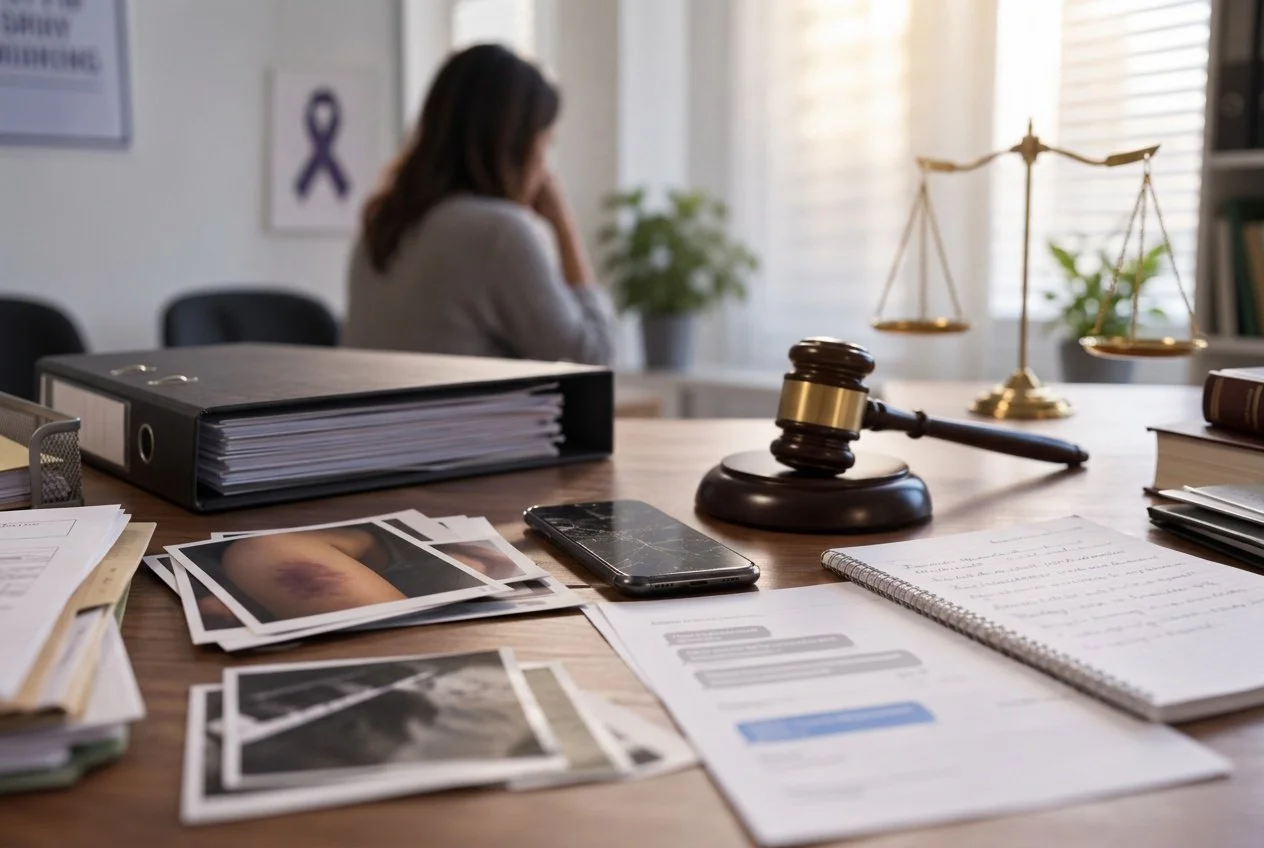
If you're experiencing domestic or family violence, knowing what evidence to gather can feel overwhelming, particularly when you're already concerned about your safety.
You may have text messages, emails, photographs or records of incidents, but be unsure whether they're relevant or how they could support an application for a Domestic Violence Protection Order (DVO).
At KLM Solicitors, our domestic violence lawyers understand how difficult these situations can be. We provide confidential, compassionate legal advice to help you understand your options, identify relevant evidence and navigate the protection order process.
What Evidence Can Support a Domestic Violence Protection Order?
Evidence can help demonstrate what has been happening in a relationship and why legal protection may be necessary.
Depending on your circumstances, relevant evidence may include:
Text messages, emails and voicemails containing threats, intimidation, harassment or controlling behaviour.
Photographs showing injuries or damage to property.
Medical or counselling records documenting injuries, disclosures or concerns about abuse.
Police reports and reference numbers relating to previous incidents.
Diary entries or written records detailing incidents, including dates, times and what occurred.
Statements from witnesses who have seen or heard abusive behaviour or observed its effects.
Not every person will have the same type of evidence, and you don't need to have everything documented before seeking legal advice.
Why Patterns of Behaviour Matter
Domestic and family violence isn't always physical, and it doesn't always involve one significant incident.
For some people, abuse involves repeated threats, intimidation, isolation, monitoring or controlling behaviour that develops over time.
Individual incidents may appear minor when viewed separately. However, when considered together, they may help demonstrate a broader pattern of coercive control or emotional abuse.
Where it is safe to do so, keeping a record of incidents can help provide context. You might note when something happened, what was said or done, whether anyone else was present and how the behaviour affected you.
These details can be particularly important when abusive behaviour occurs privately or leaves no visible injuries.
How to Keep Evidence Safe
Your safety should always come first when collecting or storing evidence.
If someone has access to your phone, computer, email or online accounts, they may be able to see what you've saved or discover that you're seeking assistance.
Keep Copies Somewhere Secure
Where possible, store evidence somewhere the other person cannot access, such as a secure account or device they do not know about.
If you're unsure whether your device is being monitored, consider speaking with a domestic violence support service about safer ways to preserve information.
Preserve Original Messages Where Possible
Screenshots can be helpful, particularly when they show dates, times and sender details.
Where it is safe, retaining original messages or files may also help establish when information was sent and provide useful context.
Avoid editing or altering evidence. If you're unsure what to keep, a lawyer can help you understand what may be relevant.
Be Mindful of Shared Devices and Accounts
Shared cloud storage, location-sharing services and connected devices can create additional safety concerns.
Changing passwords, disabling location sharing or removing access may sometimes alert the person using violence.
If you're concerned about monitoring, seek advice about managing your digital safety before making changes that could increase your risk.
The eSafety Commissioner provides helpful guidance on collecting evidence safely and protecting your information.
How Can a Domestic Violence Lawyer Help?
You don't need to work out what evidence matters or how to present it on your own.
A domestic violence lawyer can help you understand the legal requirements for a protection order, review the information available and identify what may be relevant to your circumstances.
At KLM Solicitors, we can assist with:
Understanding your options for applying for a Domestic Violence Protection Order.
Reviewing and organising relevant evidence.
Preparing an application and supporting material.
Providing advice about urgent Temporary Protection Orders.
Representing you in court proceedings where required.
Our approach is focused on providing clear advice while remaining sensitive to your circumstances and safety concerns.
You Don't Have to Have Everything Documented Before Seeking Help
One of the most important things to understand is that you do not need a complete collection of evidence before asking for help.
If gathering evidence could put you at risk, your immediate safety is more important.
Speaking with a lawyer can help you understand what information may be useful, whether further evidence is needed and what legal options may be available.
If you're considering applying for protection, you can learn more about the process on our Domestic Violence Protection Orders page.
Speak With Our Domestic Violence Lawyers
If you're experiencing domestic or family violence and are unsure what to do next, KLM Solicitors is here to provide confidential, compassionate legal guidance.
Our Brisbane-based team also assists rural, regional and interstate clients through phone and video link consultations, where appropriate.
Contact KLM Solicitors on 07 3733 0901 to arrange a consultation and discuss your circumstances.
If you are in immediate danger, call 000.
For confidential support, you can also contact DVConnect Womensline on 1800 811 811, DVConnect Mensline on 1800 600 636, or 1800RESPECT on 1800 737 732.