
Hannah Clarke: The Case That Changed Me — And Why Hannah’s Legacy Still Demands Action

There are moments in a legal career that stay with you forever. Not because of the headlines, or the attention that follows, but because of the human cost that sits behind every court document, every affidavit, every urgent application.
Hannah Clarke’s story is one of those moments.
I was honoured to have worked with Hannah prior to her murder in 2020. In the years since, her legacy — and the legacy of her children, Aaliyah, Laianah and Trey — has remained a constant reminder of why domestic and family violence work matters, and why reform cannot be slow.
19 February 2020 — A Day That Changed Me as a Person and a Practitioner
I remember the morning of 19 February 2020 with a clarity that has never faded.
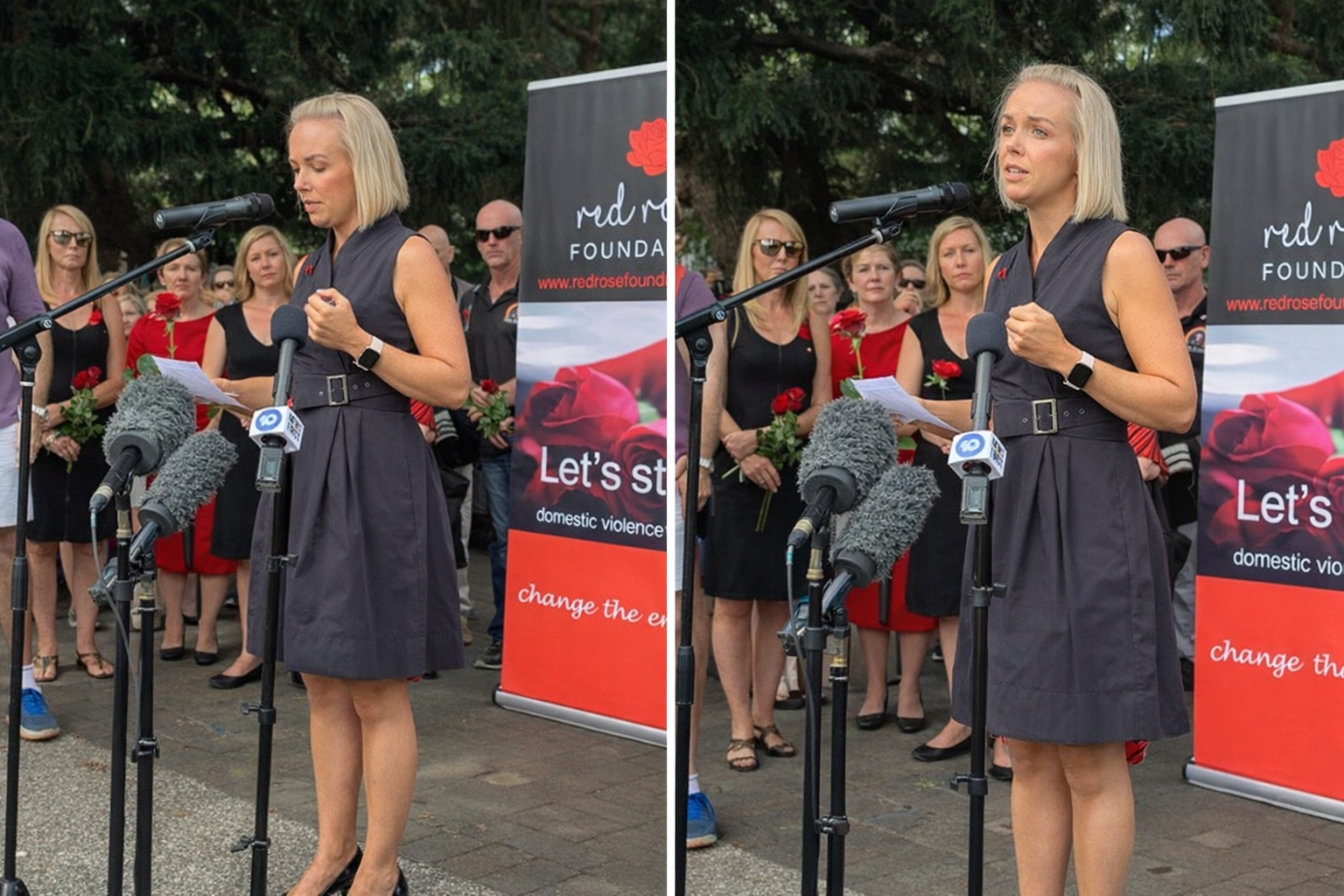
At the time, I was acting as Chair of the Board of the Red Rose Foundation, and we were deep in a meeting focused on domestic and family violence reform. It was the kind of meeting many of us had attended countless times — committed, urgent, heavy with the knowledge that lives depended on better systems, better responses, and better protection.
Partway through the meeting, someone mentioned breaking news: a young woman and her three children had been involved in an incident in the south of Brisbane. Their car had been deliberately set alight. Early reports suggested the children had not survived. Initial indications pointed to domestic violence.
The room fell silent.
Still, at that moment, I had no idea the woman was my client.
Hannah Clarke.
Hannah and I had grown close through her matter. She had my mobile number and would message me when she was frightened, when her former husband’s behaviour escalated, when she needed reassurance or guidance. We spoke often. I knew her fear. I knew her strength.
Less than three weeks earlier, I had provided advice after he had stopped seeing the children following an assault.
When the meeting ended and I returned to the office, one of my staff looked at me and said quietly:
“You know the lady in this attack is Hannah, right? Hannah Clarke?”
What followed is fragmented. I am told I screamed. I remember falling to the floor. I remember an overwhelming physical pain that felt impossible to survive.
The days that followed are largely a blur — grief, shock, disbelief — punctuated by an insidious guilt that crept in during moments when everything felt frozen.
I constantly asked myself ‘What if I had done more?’ or ‘What if the system had moved faster?’
I was carried through those early days by colleagues — their care, their steadiness, their refusal to let me disappear under the weight of it all. Over time, through memorials and advocacy events, I began connecting with Hannah’s family, a privilege I hold with deep respect and humility.
What the Public Often Doesn’t See About Domestic Violence Matters
When people think of domestic and family violence, they often picture a single incident — something obvious, isolated, and visible. But the reality is very different.
Many victim-survivors live inside a pattern: intimidation, manipulation, surveillance, isolation, financial control, and threats that rarely look like “one big event”. This is why coercive control has become such a critical part of the national conversation. It describes cumulative behaviour that traps someone in fear long before violence escalates into something unmistakable — and by then, the risk is often at its highest.
In domestic violence legal practice, I see how these patterns intersect with parenting arrangements, separation, and the practical logistics of moving forward.
The Most Dangerous Time Is Often After Separation
One of the hardest truths about domestic and family violence is this: leaving does not always mean safety.
Post-separation can be a particularly high-risk period. Litigation, handovers, parenting disputes, allegations and counter-allegations can all become mechanisms through which control continues. For many clients, this is not only emotionally exhausting — it is logistically and financially overwhelming.
This is why early, safety-focused family law advice matters. Not to inflame conflict, but to put protections in place — to document concerns appropriately, to seek orders when necessary, and to create arrangements that prioritise safety, particularly where children are involved.
Family Law Is Not One-Size-Fits-All
Every client’s matter is different — and every risk profile is different.
Sometimes the safest outcome is achieved through careful negotiation that avoids escalating risk. At other times, litigation is unavoidable, and strong advocacy is required to ensure the court has the clearest possible picture of what is happening behind closed doors.
The work requires being both compassionate and forensic: listening carefully, assessing risk realistically, and building a strategy that protects clients and children in practical ways.
In domestic violence matters, “practical” protection might mean:
safer child handover arrangements
communication protocols that limit direct contact
clear interim orders while longer-term matters are resolved
properly prepared evidence
working alongside specialist support services where appropriate
The aim is always the same: safer outcomes, and a pathway forward that reduces fear and uncertainty.
Clients must be careful to choose a lawyer who understands domestic violence, understands its intersection with family law, and is prepared to stand up and advocate fearlessly — even where that requires litigation to ensure protection.
Why Hannah’s Legacy Must Keep Driving Reform
Hannah Clarke’s murder — and the murder of her children — sparked national reflection on how we recognise domestic violence, how we intervene earlier, and how we hold perpetrators to account.
In Queensland, coercive control became a standalone criminal offence on 26 May 2025.. Legislative reform matters — but it is only one piece of the puzzle.
Meaningful change also requires:
consistent frontline understanding so coercive patterns are recognised early
properly resourced services so victim-survivors are not turned away
accountability mechanisms that genuinely shift perpetrator behaviour
joined-up systems so people do not fall through the cracks between jurisdictions, courts and agencies
In Hannah’s memory, her family established Small Steps 4 Hannah — a foundation dedicated to HALTING domestic and family violence through education, advocacy and community awareness around coercive control.
If Hannah’s story has affected you, I encourage you to learn more about the work of Small Steps 4 Hannah and, if you are able, consider supporting their work through donation. Their advocacy continues to drive critical conversations and reform aimed at preventing tragedies like this from ever happening again.

What I Want Clients to Know If They Are Living With Fear
If you are reading this and feel unsure, outnumbered, or like you are constantly managing someone else’s volatility, please know this:
You are not overreacting and you deserve to be taken seriously.
Legal support is not just paperwork. It can be stabilising. It can help you understand your options, plan next steps, and create safer structures for you and your children.
While no lawyer can promise an easy process, the right support can mean you do not have to navigate it alone.
A Note on Respect, Privacy, and Why I Speak Carefully
As lawyers, we hold people’s lives in our hands in very real ways — their safety, their children, their financial stability, their dignity. Confidentiality is not a technicality; it is part of protection.
That is why I will not share details that are not public, and why I speak in principles rather than particulars.
But I will say this: Hannah’s story — and the stories of too many others — must continue to push all of us toward earlier intervention, better resourcing, and systems that truly protect.
Because, as I have unfortunately learned firsthand, “after the fact” is too late.
For practical guidance, read more about the financial barriers to leaving a relationship and how Protection Orders work in Queensland.
Support Services
If you or someone you know needs confidential support in Australia, the following services are available:
1800RESPECT — 1800 737 732
National counselling and support for people impacted by domestic, family and sexual violence (24/7).DVConnect Womensline (QLD) — 1800 811 811
Specialist crisis support, safety planning and referrals for women experiencing domestic and family violence in Queensland.Women’s Legal Service Queensland
Free legal advice and assistance for women experiencing domestic and family violence, including family law, child protection and safety matters.SunnyKids
A Queensland-based organisation supporting children and families affected by domestic and family violence, homelessness and crisis through early intervention and community programs.Lifeline — 13 11 14
Crisis support and suicide prevention services available 24/7.